

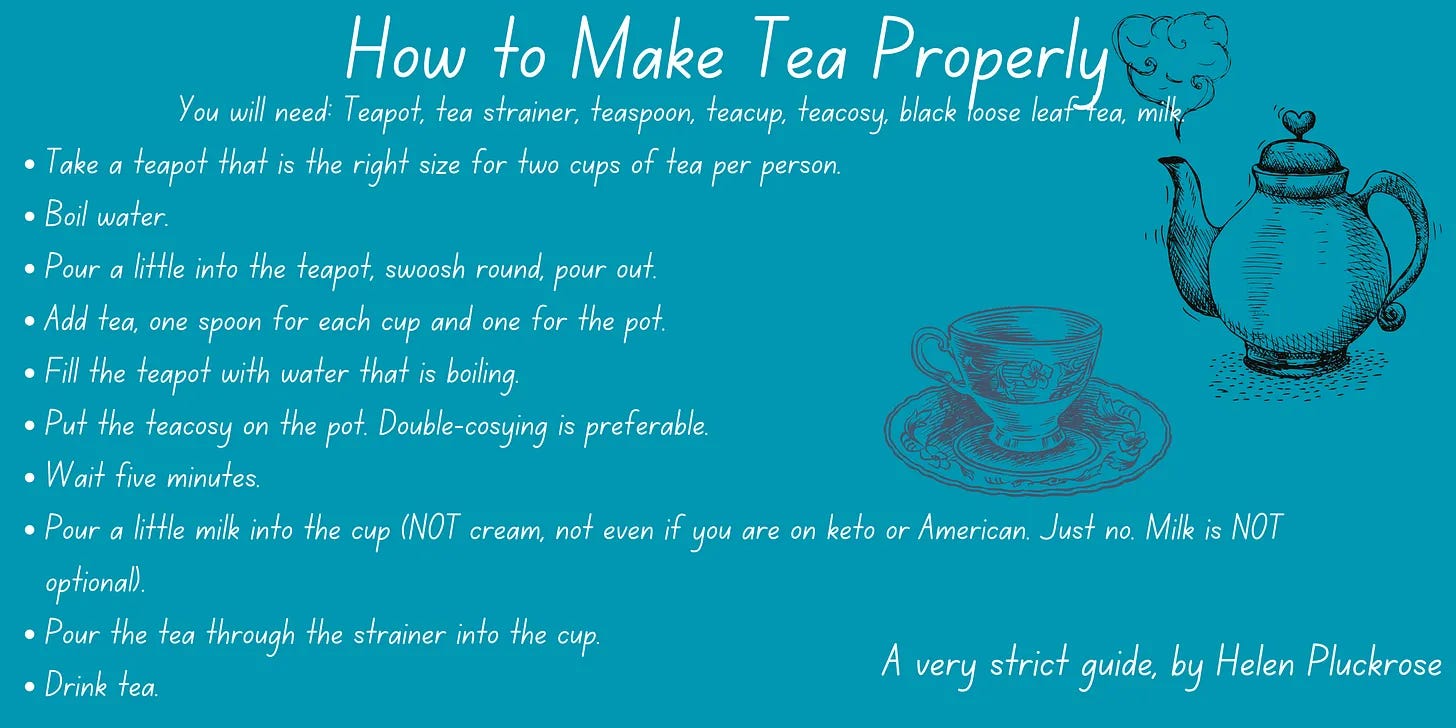
(Audio version here)
The Overflowings of a Liberal Brain has over 7000 subscribers! We are creating a space for liberals who care about what is true on the left, right and centre to come together and talk about how to understand and navigate our current cultural moment with effectiveness and principled consistency.
I think it is important that I keep my writing free. It is paying subscribers who allow me to spend my time writing and keep that writing available to everyone. Currently 3.8% of my readers are paying subscribers. My goal for 2026 is to increase that to 7%. This would enable me to write full-time for my own substack! If you can afford to become a paying subscriber and want to help me do that, thank you! Otherwise, please share!
The time has come for me to write my definitive guide to proper tea-making. Although I have explained the process many times and even created the above graphic, many people, mostly American, remain (deliberately?) confused on the subject. Meanwhile, I regret to say, some Brits continue to make egregious errors in the process, thus bringing shame upon us all.
Some will say there is no need for my guide to tea-making, since George Orwell settled the matter authoritatively in 1946 and Christopher Hitchens endorsed his Golden Rules in a heartfelt plea to Americans in 2011. I disagree for two reasons.
Firstly, while I revere Mr. Orwell as a liberal visionary second only to John Stuart Mill, I do believe him to have erred on two points in his guide to tea. Mr. Hitchens’ brilliance when he was right also commands my greatest respect, and this is not dimmed by the occasions on which he was equally startlingly wrong. Nevertheless, he repeats these errors.
Secondly, the tea-making directions of both gentlemen are incomplete! They focus entirely on the functional aspects of tea-making and neglect the psychological, aesthetic and even spiritual elements that have earned tea its place in the British psyche. Admittedly, Orwell acknowledges its power to make one feel ‘wiser, braver [and] more optimistic’, but tea is only in part a leaf to be infused in boiling water for the purposes of stimulation.
Far more importantly, tea is a sacred ritual and an act of devotion. It is to be performed in the morning, at elevenses, at tea-time, on the arrival of a guest or on arriving home from having been anywhere at all. It is also the familiar, grounding response to any kind of news or significant happening. Tea is both celebration and commiseration; fortification and solace. Tea says “I love you,” “I forgive you,” “I am proud of you,” “I am here for you,” “We will get through this” and many other statements of profound connection that we inhabitants of this island find so difficult to say with our mouths. Consequently, the finer details of this ritual matter and that is what my contribution to this important issue will offer.
I have been charged with abandoning my liberal principles when it comes to matters of tea. I stand accused of authoritarianism and totalitarianism for allegedly seeking to establish orthodox tea-making practices and impose them upon the population. Nothing could be further from the truth! I insist only upon some very fundamental standards. As I set out my revised and expanded guide to tea-making, it should become clear that there is ample scope for individual expression and autonomy.
The Equipment
The Tea
Mr. Orwell and Mr. Hitchens are both correct in maintaining that the only appropriate tea is black Indian tea, also known as ‘Breakfast Tea” or, in the UK, just ‘tea.” It may be botanically correct to refer to other products of the plant Camellia sinensis as ‘tea’, but this is morally suspect. They should always be qualified with an adjective like ‘green” and, ideally, avoided. Other herbal infusions should never be referred to as ‘tea’ or substituted for tea, but may be drunk if identified correctly.
The tea leaves should be free to circulate within a teapot. Tea bags constrain them, reducing the richness of the flavour and denying one the calming ritual of tea-making. However, if one is forced to use them in circumstances where one is away from home and bringing a teapot is impractical, the brand matters. The best tea bags are Yorkshire Tea, but PG Tips and Builders Tea also provide the necessary strength. In an emergency, Tetley is adequate but not better than supermarkets’ own-brand tea. Twinings’ ‘Breakfast Tea’ is nothing of the sort. However, if forced to use it, three bags brewed for several minutes and squeezed vigorously will produce something resembling a proper cup of tea. To avoid stooping to this, it is best to carry tea bags with you at all times.
The Milk
Milk is an essential component in a proper cup of tea. It is common for Europeans to deride this rule, with the Germans and the Dutch being particularly obnoxious on the subject. Americans, too, have been known to assert that tea does not need milk. They could not be more wrong. Without milk, the tea must be brewed for only a minute, until the water turns a light, yellowy brown. It is then deplorably weak and utterly pointless. Only properly made tea produces the ‘ahhhhh’ factor and that sense that anything is achievable and survivable. This comes precisely from the tea's strength and the bitterness of tannins that have had time to seep into the brew. The milk preserves, but softens, the sharpness. This combination of strength, bitterness, and milkiness results in the ‘ahhhhh’ factor and also, I would argue, the development of the British Empire, liberal democracy and the Industrial Revolution. (Source)
Full-fat, skimmed or semi-skimmed milk is acceptable for this purpose, thus allowing for individual autonomy. The quantity of milk can also vary, although those who use little are generally held in higher regard and very milky tea is liable to damage one’s reputation. Cream is never acceptable. As Orwell rightly notes, it makes the tea sickly and obscures its taste. If one is genuinely lactose intolerant to the point that milk might result in death, oat milk may be substituted, although it is still better not to admit this in public.
The Teapot
This is a matter of the utmost importance. Orwell correctly says the teapot should be made of china or earthenware, but gives no further specifications. I shall remedy this oversight.
The teapot should be round. It need not be entirely spherical. It may be slightly flattened or elongated, or curve in more sharply at the bottom, but its roundness is essential. Behold the traditional British teapot, the Brown Betty, and beneath it, my own teapot (whose name is Gladys).
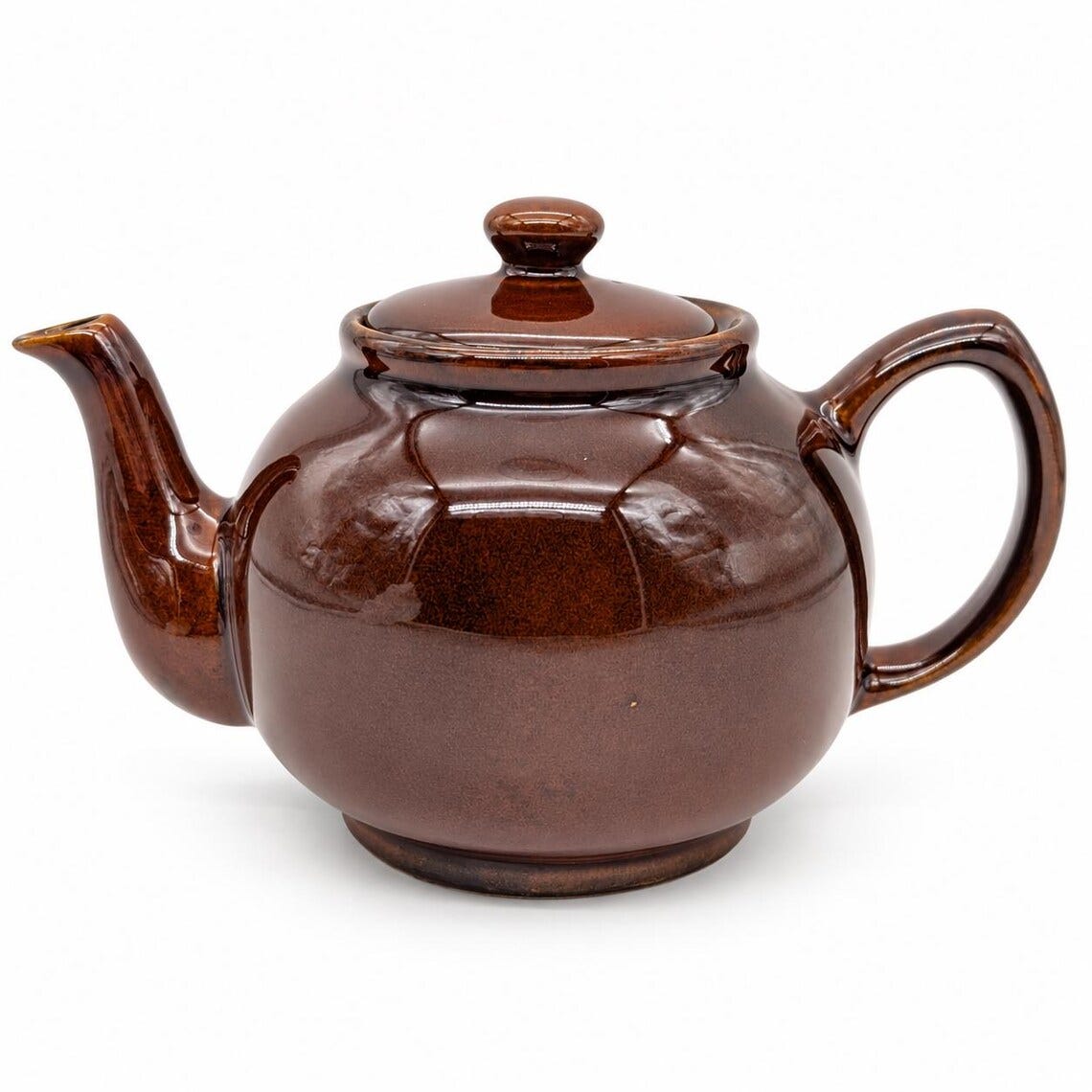
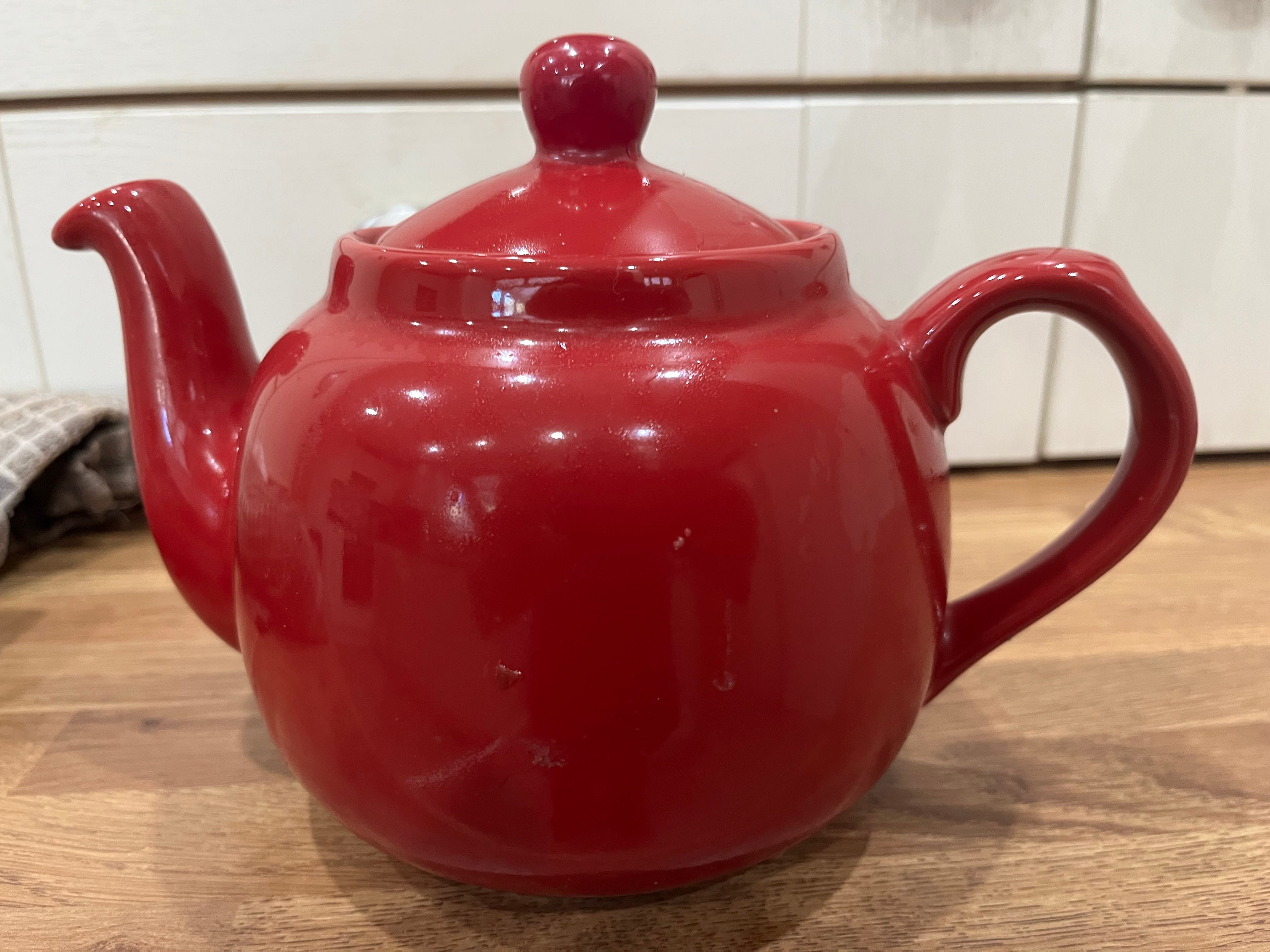
The roundness of the teapot is important for several reasons. Firstly, it gives the tea leaves plenty of room to circulate when the boiling water hits them and to brew when they have settled at the bottom. Secondly, it enables an efficient swoosh of hot water that thoroughly coats the insides during the warming process with minimal risk of injury or spillage. Thirdly, a round teapot is a cheerful and comforting companion whose pleasing rotundity and solidity exude reassurance that everything will be alright. A skinny or angular teapot is a sad and jarring object from which no such comfort can be expected.
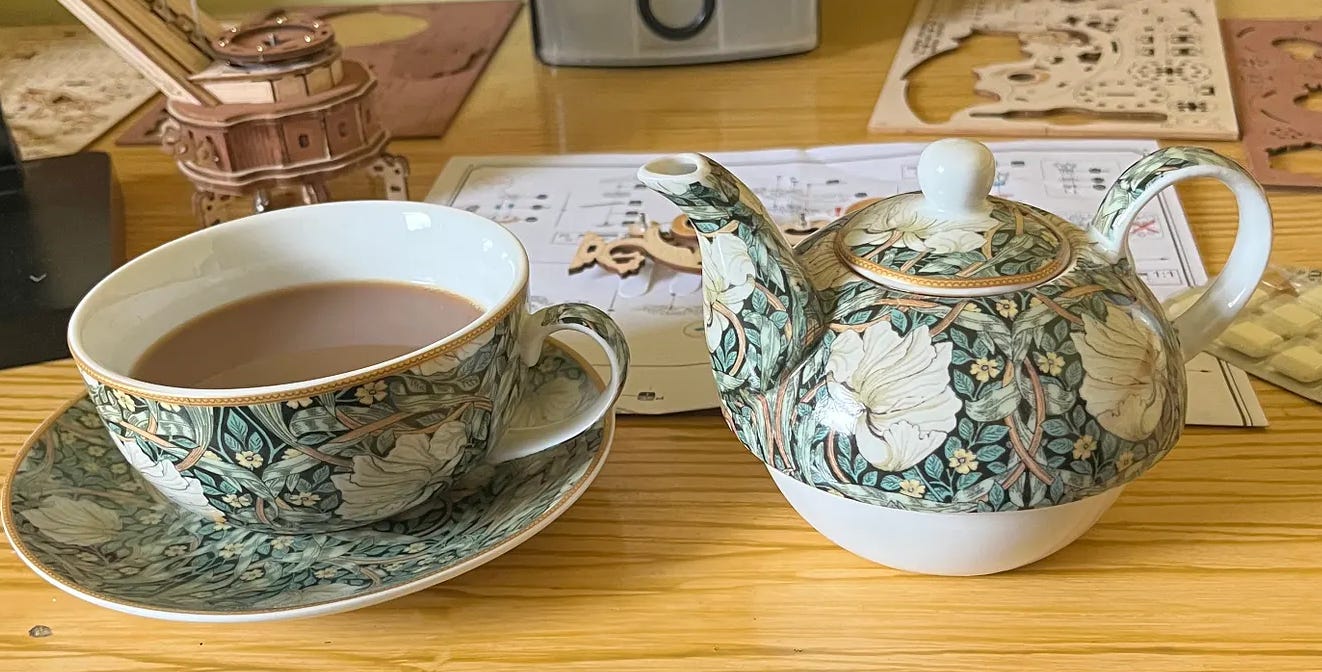
The handle of a teapot is important. This should also be rounded and sufficiently capacious for a large man to grasp it firmly with all four fingers inside the curve. Of paramount importance, however, is the spout. The base of the spout should be low enough to ensure the tea can be poured confidently and speedily even when the pot is full. Pay attention to this. I was seduced by the attractive roundness of this teapot and cup set, but note that, when separated, the base of the spout is dangerously high. This means the teapot cannot be filled to capacity without a vigorous pour causing tea to dribble out from under the lid. This is no good at all. Beauty in a teapot is no substitute for functionality.
It is advisable to buy teapots from well-established teapot makers to avoid such a catastrophe. I recommend Price and Kensington. The attractiveness of the spout is important. It has a similar effect on the character of a teapot to that which a nose has upon a face. Too long and thin and the teapot has a mean and joyless expression; too straight and aquiline and it appears to be sneering superciliously. A short and blobby spout makes one doubt a teapot’s strength of character and ability to fortify one. A relatively short spout with a broad base and a pleasingly curved tip, however, gives a teapot a cheerful, open and welcoming expression.
I have always favoured red or yellow teapots for their warmth and cheerfulness, but this is an area where individual liberty and viewpoint diversity are entirely legitimate! Perhaps you are a traditionalist and prefer a glazed brown teapot or grey earthenware for its sense of groundedness and solidity? Or perhaps you are a purist or minimalist who likes to be greeted by a white teapot for a calm and serene start to the morning? Perhaps a black teapot appeals to your more dramatic aesthetic sensibilities, or perhaps you are a whimsical, artistic type who takes pleasure in a striped or spotted teapot? The possibilities are endless.
The Teacosy
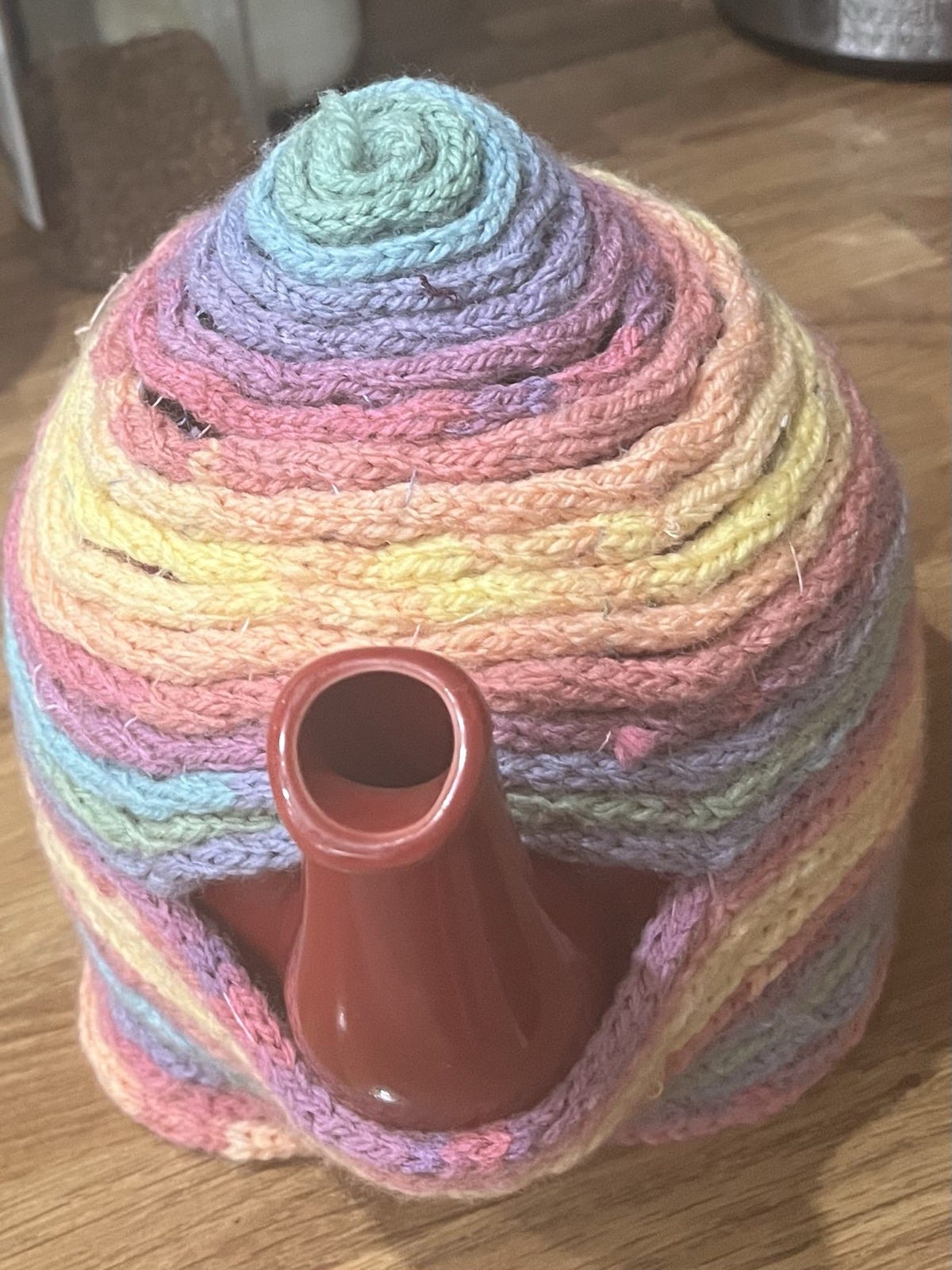
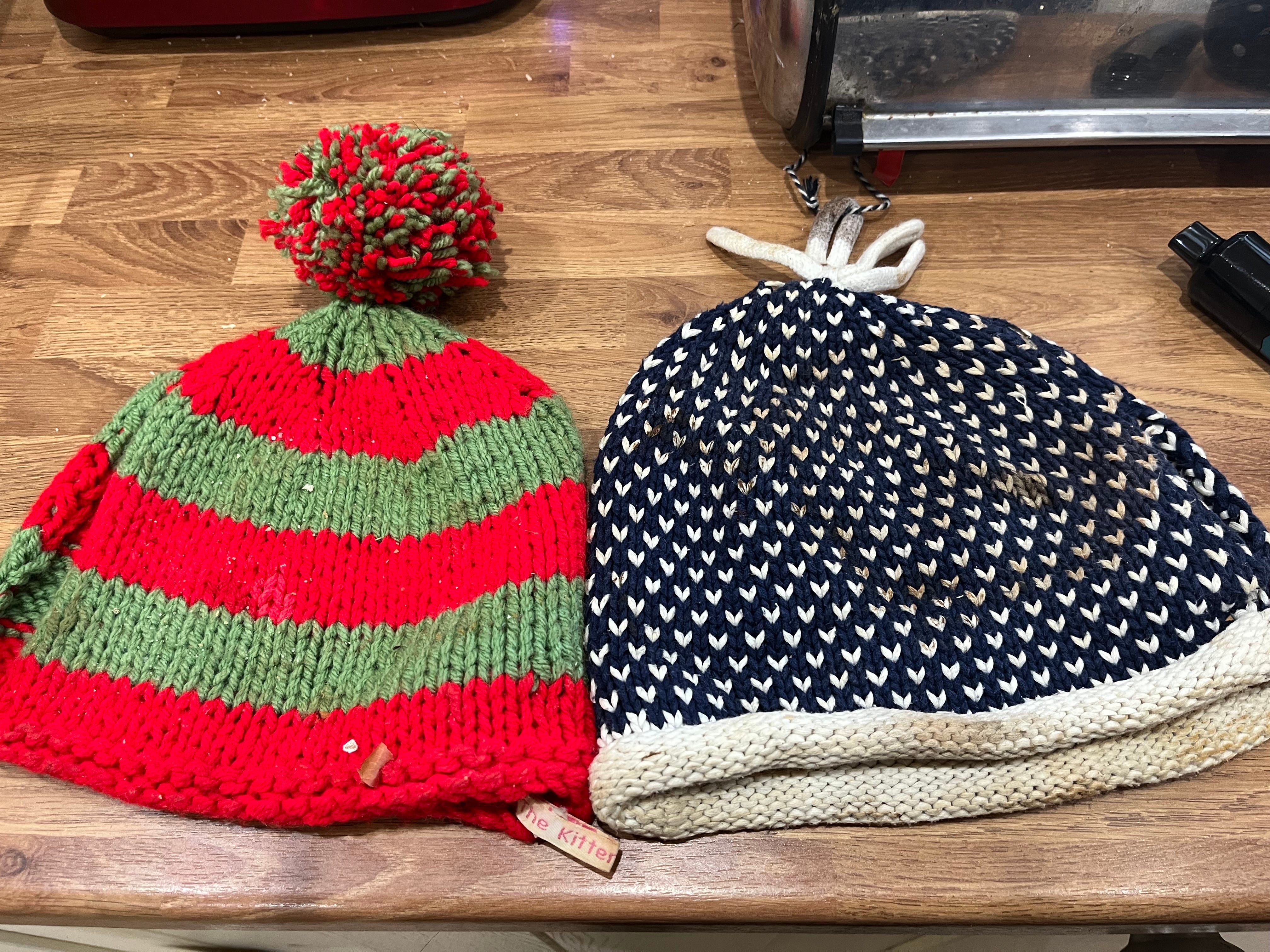
This is another area for individuality to shine, but certain standards must be maintained. A teacosy should be knitted, crocheted or otherwise worked in wool and perfectly fitted to the teapot. Ideally, it will have a bobble on the top. In recent years, most regrettably, a new style of dome-shaped teacosy made from a padded, insulated material has been mass-produced. It resembles nothing so much as a laptop cover! It may be efficient for heat-retention but is utterly lacking in heart and an insult to any self-respecting teapot. A teacosy should be chosen or made with care to accentuate the character of the teapot. Double cosying can address the practical problem of heat loss and is advised.
The Strainer
Some teapots come with a fitted steel mesh for the tea leaves. Remove this. As Mr. Orwell correctly notes, the leaves need to be able to circulate freely to bring out the richness of tea’s flavour. Instead, a separate tea strainer can be placed over the cup before pouring. These come in various sizes and I prefer the larger ones. However, it may not be necessary to have a strainer at all, if one has acquired a teapot with a broad base. The tea leaves will settle to the bottom and remain there if the tea is poured gently. If some escape into the cup, this is not an emergency. As Orwell also correctly notes, a considerable quantity of tea leaves can be swallowed without causing any harm.
The Cup
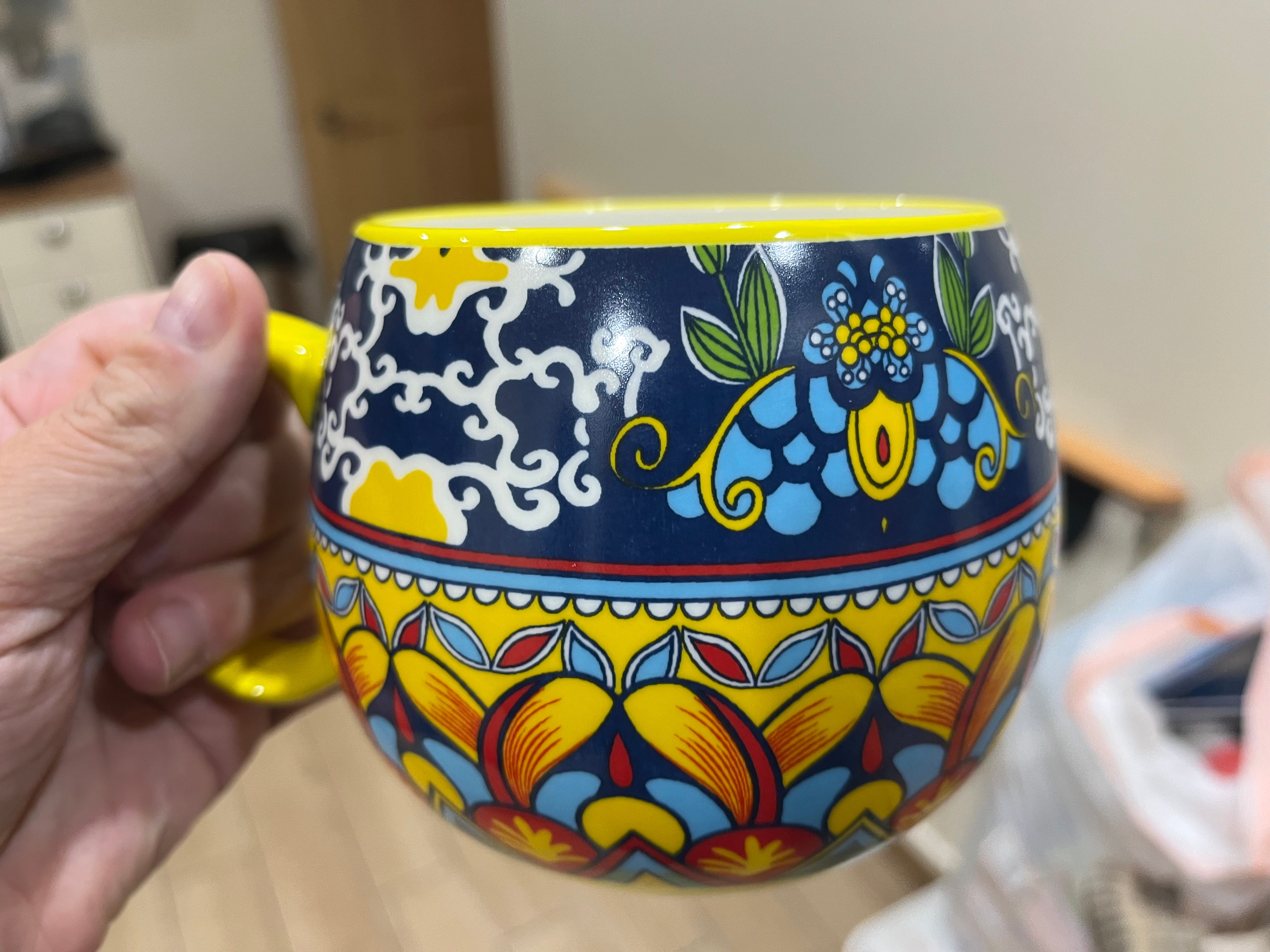
This is where I must depart from Mr. Orwell and Mr. Hitchens. They both advocate a narrow, cylindrical cup on the grounds that it retains heat better. Why, I ask you, would one wish it to do that? Once one has waited the requisite five minutes for the tea to brew, surely one wishes to imbibe the nectar as soon as possible and pour another cup, rather than sit there watching it steam? No, a wide, rounded teacup is preferable as it enables speedier consumption and consequently more cups of tea before having to leave for work. It is possible that both gentlemen, being intellectuals writing from home, did not consider this important factor. A wide teacup also has a pleasing roundness that complements the teapot and provides a more efficient means of warming cold hands on a winter morning.
The Process
Warming The Pot
First, empty the kettle entirely and refill it. Repeatedly boiled water tastes stale and flat, tainting the flavour of the tea. Once the water is boiled, pour a sufficient quantity into the teapot to fill it about a third of the way and swoosh it around the insides. Let it sit for a minute before pouring it out. Some people recommend also warming the cup in the same way, but I do not believe this to be necessary. The purpose of warming the pot is to ensure that the tea leaves meet with boiling water and infuse properly. Once this is achieved, warming the cup merely prolongs the wait for the tea to be cool enough to drink.
Adding The Tea
Add one teaspoon of tea for each cup you wish to make and an additional ‘one for the pot.’ Gladys, for example, is a four-cup teapot. When making two cups each for my daughter and myself, I add five teaspoons of tea and fill her to the top. When I am alone, three spoons is sufficient and I half fill the pot.
Adding the Boiling Water
Boil the kettle again and immediately pour the boiling water over the tea leaves. Mr. Orwell recommends giving it a good stir. I do not think this is essential, but it cannot hurt. Put the lid on and double-cosy.
Wait
It has been argued that the correct brewing time is anywhere between four and ten minutes. Again, I demonstrate my open-mindedness and commitment to viewpoint diversity by accepting this as a matter of individual taste. Nevertheless, I think five minutes is the minimum to produce a proper, rich cup of tea and that it is better to err on the side of brewing for too long than not long enough. Underbrewed tea is lifeless but it can sit in a pot for half an hour before becoming what is often referred to as ‘stewed.’ Double-cosying can keep it warm for that long.
Adding the Milk
This is where Britons become most bitterly divided. Lifelong feuds and even physical altercations have taken place between the ‘milk firsters’ and decent human beings. (See this rap account by the eminently sensible Doc Brown). However, this battle only applies to tea made with tea bags. In this scenario, it is utterly unconscionable to add milk to the tea bag before the boiling water because the leaves are then not allowed to infuse in boiling water, and the result is therefore not tea. The golden rule is: The milk should never touch the tea leaves. Those who flout this rule are rightly shunned.
However, when making tea properly in a pot, the tea is fully brewed before the milk is introduced. Therefore, it does not matter whether the milk is already present in the cup when the tea is poured or added afterwards. There are some who maintain that milk was only ever added first because cups were shoddily made and unable to withstand boiling water and the practice is unnecessary now we have sturdier ones. This may be true, but is irrelevant to the quality of the tea.
Orwell argues that the tea should be introduced to the cup first and the milk added afterwards to correctly gauge the quantity of milk. He writes,
I maintain that my own argument is unanswerable. This is that, by putting the tea in first and stirring as one pours, one can exactly regulate the amount of milk whereas one is liable to put in too much milk if one does it the other way round.
I can answer you, sir!
This may be good practice when drinking tea from a non-standard cup or pouring milk from an unfamiliar jug. It is not remotely necessary when using one’s own china or crockery of the same proportions. You yourself imply that you pour your milk directly from a glass milk bottle, and I put it to you that you, like all faithful tea-drinkers, developed the muscle memory required to pour the perfect quantity in childhood. We are no more likely to make a mistake about this than we are to forget how to walk!
Personally, I like to pour the tea into the milk so I can see it swirl around and richen to a deep chestnut as the cup fills. I make no moral judgement of anybody who obtains similar pleasure from watching the milk swirl into the tea. I maintain that there is no good argument for preferring one method over the other when it comes to producing a proper cup of tea.
It should be clear that proper tea-making allows considerable scope for individual autonomy within a framework of fundamental standards. The freedom to choose one’s teapot colour, brewing time and order of adding milk does not oblige us to embrace moral and epistemological relativism. We need not pretend that milky water with a tea bag floating in it bears any resemblance to a proper cup of tea, let alone that it should be tolerated in polite society. We must preserve these standards and pass them on to future generations!
George Orwell’s Golden Rules for making tea remain sound, as does almost everything he wrote. My disagreements with him over the finer points of milk order and cup shape fall entirely within the well-established British tradition of arguing about tea. We are well aware of the absurdity of a nation that does not even have the climate to grow tea engaging in endless, nitpicky arguments about precisely how to make it, as a matter of great cultural importance. These disputes allow us to indulge in two of our favourite national pastimes: moaning and arguing.
Beneath all this, tea provides a means for a largely secular and culturally reserved people to connect with one another. It is a ritual through which we offer continuity, stability, hospitality, affection, reassurance and emotional support, often without needing to express these things in words. Do the rituals really matter? Well, yes. But only because people matter.
Appendix: On Biscuits and Their Dunkability
Another important element of British tea-culture, not addressed by Mr. Orwell or Mr. Hitchens is the question of biscuits and their dunkability. Biscuits typically feature at Elevenses (whenever the midway break between breakfast and lunch happens to fall) and Tea Time (any time between 3PM and 5PM depending on when dinner is served) and are very important. Many heated arguments have taken place over what is and is not an appropriate dunking biscuit.
Firstly, let us discuss what does not constitute a proper biscuit suitable for consumption with a mid-morning or mid-afternoon restorative cuppa. These include self-aggrandising, garish, chocolate coated, cream-filled or jam-filled confections. Nor does it include the large, soft round things often studded with chocolate known as a ‘cookie’ in recognition of the Americans who invented them while erroneously using the term ‘biscuit’ for some kind of savoury scone. These may be acceptable to eat as a treat on other occasions but they have no place sitting beside a decent, modest, unassuming cup of tea.
Genuine scones with jam and clotted cream can, of course, be eaten with afternoon tea alongside other cakes. This, however, is a ‘cream tea’ denoting a special occasion and our interest here is in everyday tea practices.
On the borderline of respectability for everyday tea are custard creams and Bourbon biscuits, as well as chocolate digestives and chocolate hobnobs. These are traditional and relatively humble biscuits and so possess a degree of acceptability. Nevertheless, they do not dunk well, and attempting to do so taints the tea with chocolate or cream filling. They may, therefore, be present but not dunked, remaining somewhat separate from the tea ritual. Shortbread biscuits, meanwhile, can be dunked but do not absorb tea well, so are better eaten separately.
The most appropriate biscuits for everyday tea accompaniment are therefore: rich tea biscuits, plain digestives, plain hobnobs, and ginger nuts. They can be rated for tea absorption, sustenance, structural integrity, tastiness and respectability.
Rich Tea Biscuits
Despite their name, Rich Tea Biscuits are not rich. They are the plainest and most unassuming of biscuits and so can be eaten in the greatest quantity without spoiling one’s appetite or expanding one’s waistline. Because of their insubstantiality, they cannot be held in tea for more than two seconds without disintegrating and this is not long enough to allow them to absorb any tea. Consuming them can feel a little like eating wet cardboard. Nevertheless, they have a pleasant, mild flavour and a thoroughly respectable reputation. Rich Tea Biscuits, I would argue, mostly serve to provide one with the ritual of eating biscuits without really feeling like one has done so.
Tea absorption: ★☆☆☆☆
Sustenance: ★★☆☆☆
Structural integrity: ★☆☆☆☆
Tastiness: ★★☆☆☆
Respectability: ★★★★★
Digestives
These are much more substantial biscuits and this is reflected in their calorific content which is nearly double that of the Rich Tea. Digestives are also relatively plain and unassuming, but seem to come to life when combined with tea. They can be dunked for a few seconds and absorb considerable amounts of tea before softening into a more intensely flavoured and tastier version of themselves. Some skill is required in the timing and, if they fall into the tea, they can be difficult to fish out with a spoon. However, because of their especially tea-compatible flavour, this may not be a disaster. Two of them are generally sufficient to quell hunger until lunchtime.
Tea absorption: ★★★★☆
Sustenance: ★★★★☆
Structural integrity: ★★★★☆
Tastiness: ★★★☆☆
Respectability: ★★★★☆
Hobnobs
Hobnobs have similar substance and durability to digestives but a much richer and more distinctive character of their own. Their sweet, oaty flavour can somewhat overpower the tea, especially if allowed to fall into it. For this reason, they feel more like a sweet treat than a mere accessory to tea. Accordingly, I am mildly suspicious of their Main Character Syndrome and feel that they lack the appropriately reverential attitude to tea. Nevertheless, they are solid, traditional biscuits and absorb tea well, while satiating hunger and providing a sugar boost.
Tea absorption: ★★★★☆
Sustenance: ★★★★☆
Structural integrity: ★★★★☆
Tastiness: ★★★★★
Respectability: ★★★☆☆
Ginger Nuts
There are some who will complain about the inclusion of Ginger Nuts in this list. They have a reputation of being the biscuits most commonly left at the bottom of the barrel with little to recommend them. However, I feel they have been underrated. They have a similar calorific content to the Rich Tea, but far greater substance and a structural integrity that surpasses all the others. Ginger Nuts can be held in the tea for quite some time without transferring their flavour to it. They soften slowly without disintegrating and remain substantial even when thoroughly softened. They have a strong flavour which is mellowed and, I feel, complemented by the tea. Consuming two of them often feels like enough. Ultimately, enjoyment of Ginger Nuts depends on the individual’s liking for ginger!
Tea absorption: ★★★★☆
Sustenance: ★★★★☆
Structural integrity: ★★★★★
Tastiness: <debatable>
Respectability: ★★★☆☆
Personally, I favour a dependable digestive on most ordinary tea occasions, a charismatic Hobnob on days when I am feeling adventurous or have a sweet craving, a couple of defiant ginger nuts when I am particularly hungry but have few calories left in the budget, and a respectable Rich Tea when I don’t really fancy a biscuit but enjoy the dunking ritual.
Honestly, I thought zapping the water in the microwave and then tossing in a Lipton bag was sufficient, but I guess I'll try this method ;)
I’m going to do it the Japanese way out of pure spite now. Stop telling me what to do, Redcoat.
Now, where are my teabags….