

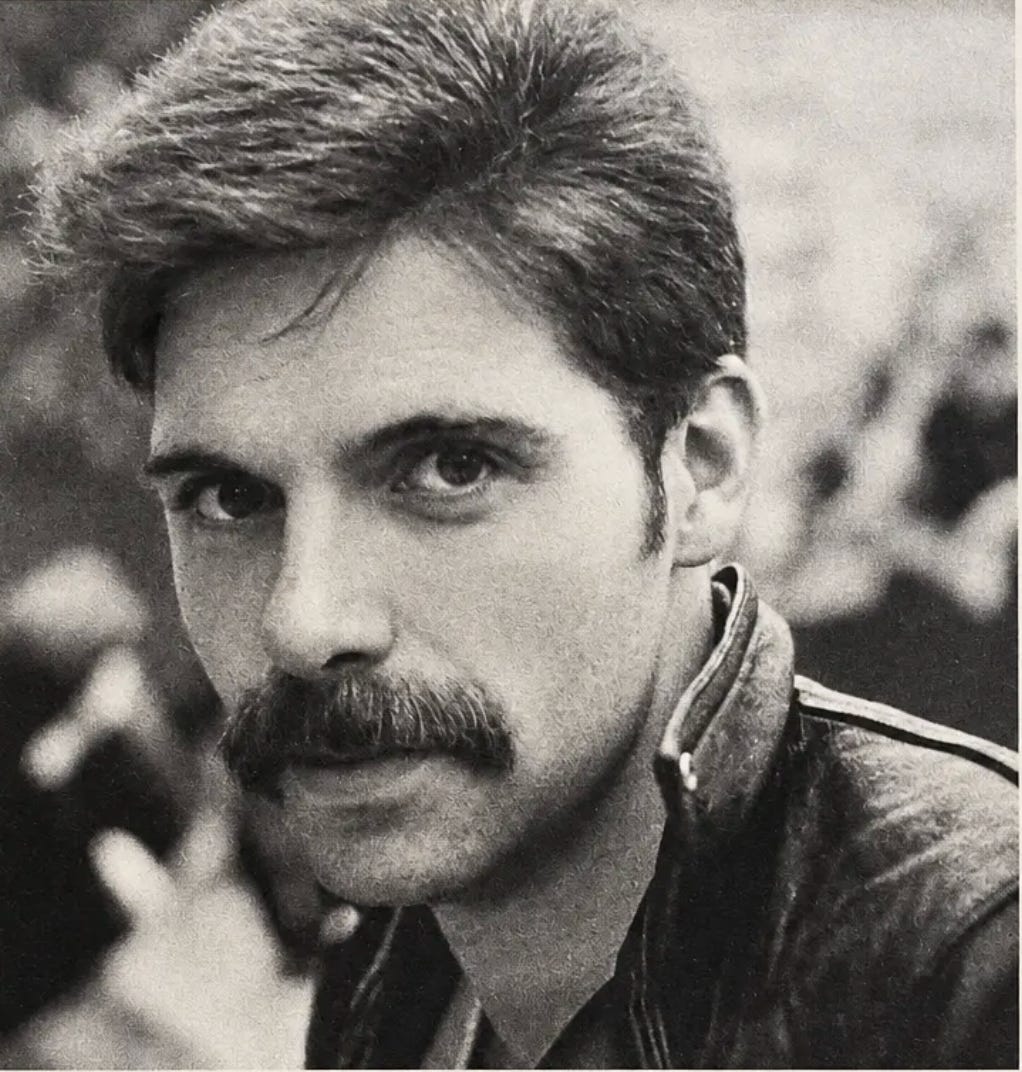
Yesterday, my friend Mark would have been 64. He died at 35 of AIDS-related meningitis when I was 23. Mark was a writer, poet and comedian. Below, I share three of his poems in memory of him.
I was a care assistant working with elderly and disabled people in their own homes when I met Mark. I was hired at 19 specifically to support him and two other young men who were gravely ill with AIDS, which, at that time, was a death sentence. “Home helps,” as they were called then, were typically in their 50s and there were a lot of misconceptions about AIDS and how it is transmitted and a great deal of fear and even hostility. The council looked for younger carers who had received recent education about this and would not be afraid to work with AIDS sufferers. So, I became the youngest Home Help in Redbridge.
While most of the older care assistants were friendly and supportive of me, a couple were angry that I had been brought in to work with people suffering with AIDS, all of them, at that time, gay men. They blamed the sufferers to the extent that they believed they should not be cared for, even while dying. One woman rounded on me and asked why Mark deserved care and why he was still even alive when her son was dead. Her son had been involved in a fight during which he sustained a skull fracture. It had been repaired but left a weakness. When he got into another fight and he was punched in the face, he died instantly. I was astounded by this reasoning. Her son did not deserve to die either, but it was entirely unclear to me why his doing so as a result of engaging persistently in violence was morally superior to contracting a fatal virus while having consensual sex. I did not retaliate because she was demented with grief but her views were not uncommon at that time. To this day, I cannot engage with people speaking callously or even gleefully about the suffering and death experienced by so many, mostly young men, during the AIDS crisis.
I helped Mark with housework and shopping twice a week because he was very weak and tired easily, but we quickly became close friends and spent social time together, talking for hours. I would say that he cared for me more than I cared for him, but he’d probably disagree. He was a brilliant comedic writer, but also wrote some deeply poignant and moving pieces. I was fascinated by his brain and the way he thought. He was similarly enamoured of mine and encouraged it. I was a rather chaotic and self-destructive young person then, racketing around and making ill-advised life choices when it came to men and substances. His twenties had been similarly spent.
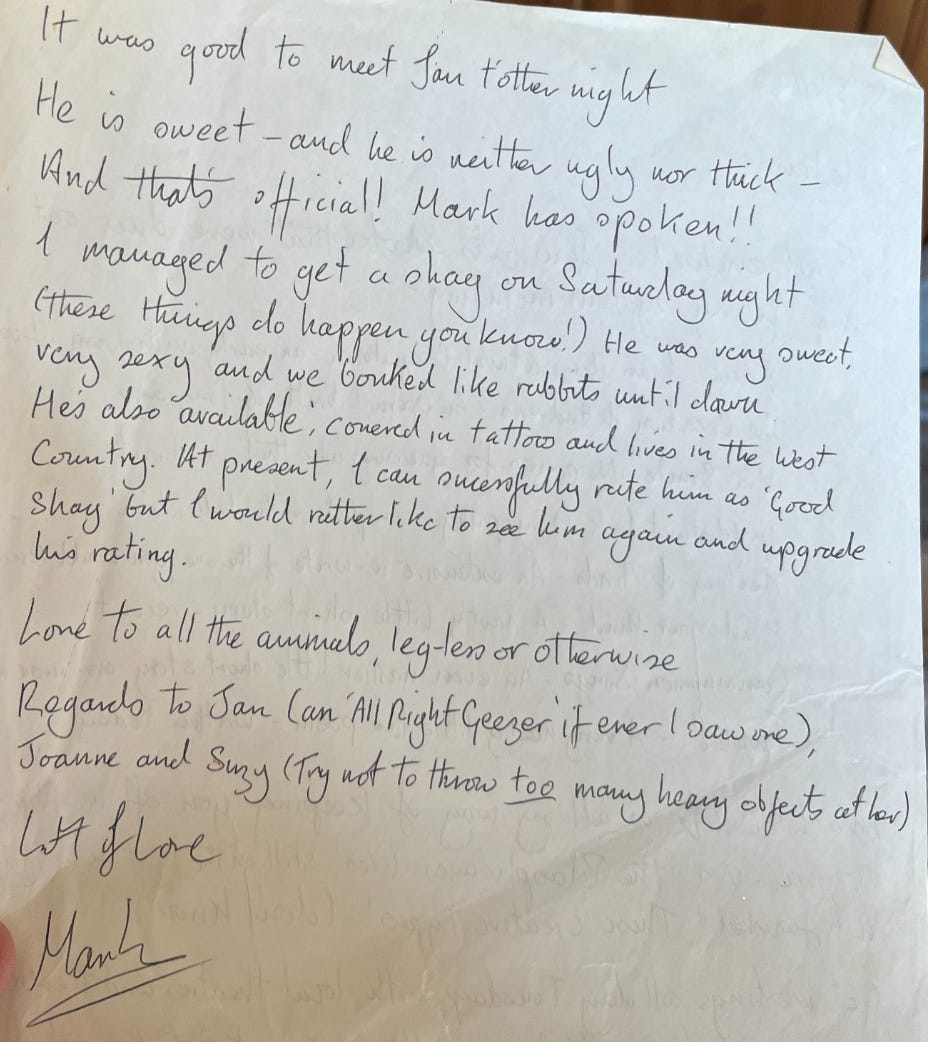
Mark took something of a ‘big brother’ role in my life, but in such a beautifully non-judgemental and humorous way, I could never resent this. He’d vet my boyfriends and send me extremely funny character analyses and future happiness projections. He’d also talk to me about his own disastrous exes and bad decisions and his thoughts on love, life and relationships. He found that I was somebody he could talk to and be understood and I found the same qualities in him. When he went away, we exchanged letters so we could keep the conversation going.
Mark was in love when he died. His name was Tony. Tony loved him too. He also had AIDS and at the beginning of their relationship, they loved with the knowledge that their time together would be brief. Then protease inhibitors became available and, on his last appointment with a specialist, Mark was told “You could be one of the first people to survive this.” Suddenly, Mark and Tony had a future and the character of their relationship changed and deepened.
My friendship with Mark changed too. We were no longer making the most of a fleeting time that we would be two oddly compatible weirdos on this earth together, enjoying each other’s conversation. We spoke about the future including my wish to have children and what kind of uncle or irreverent ‘godfather’ to them he would be.
This was not to be. Within weeks of hearing this optimistic news, Mark developed meningitis and the drugs had not significantly strengthened his resistance for him to have a chance of fighting it. When it became clear that he had sustained severe brain damage, his next-of-kin enacted the wishes of his living will and turned off his life support.
Tony’s heart was broken but he stayed very strong. I don’t think he had fully allowed himself to hope they would both survive the virus and have a future together. He channelled his grief into caring for everybody else who was falling apart. Tony was one of the kindest, gentlest and most stoical people I have ever met. He included me in his care. I suffered a catastrophic nervous breakdown at the loss of Mark and was admitted to a psychiatric hospital under the Mental Health Act as a danger to myself. I did not fully recover and return to work for four years. I felt adrift without my friend and during that time, Tony tried to support me, both because he liked me and because Mark had asked him to look out for me in the event of his death. Tony survived and, I hope, went on to find love and happiness again.
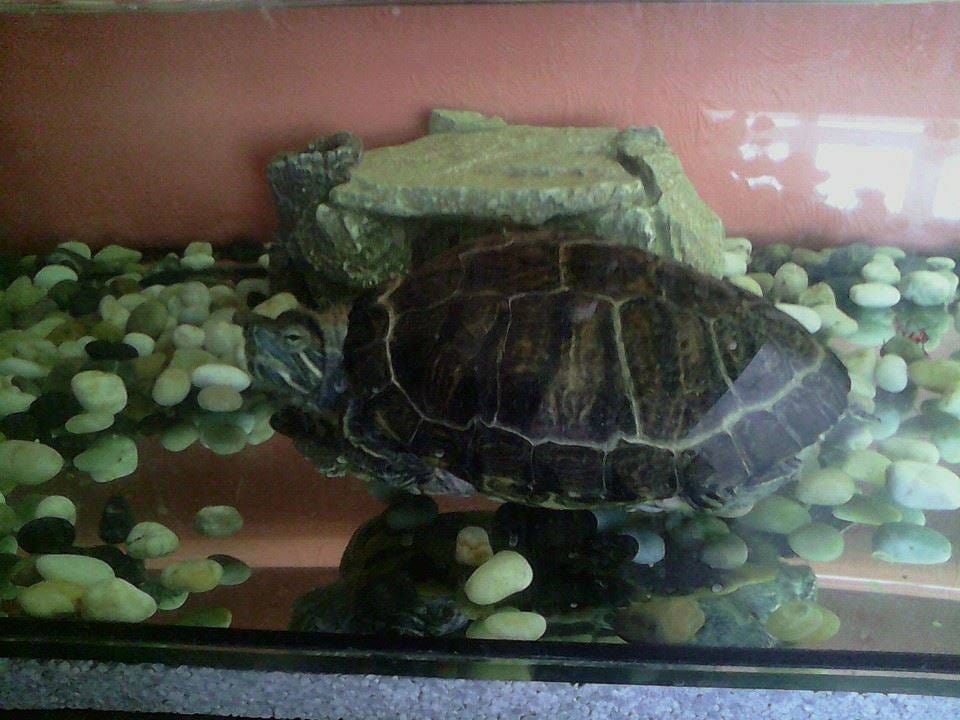
I have a copy of everything Mark ever wrote and all his letters. I also have an ornate Gothic “M” tattooed on my shoulder. Until last year, I had his elderly turtle, Ethel, whom I took charge of when he went into hospital. Ethel lived to be 52, which in turtle years is about 116 and I think her extreme longevity would have made Mark happy.
I have still never met anybody like Mark and I still think of him on a near daily basis and miss him. You were a deeply formational influence on my life, my friend. You told me I could think and write and that I had a remarkable brain. You told me I was lovable and kind and funny. You helped extricate me from two deeply dysfunctional relationships using a ruthless lack of tact and sarcasm. You helped pick up the pieces afterwards. You should still be in my life and in Tony’s. The daughter we imagined me having is an adult now and she does know she has an Uncle Mark whom she would have loved. And she would have loved you. I will not say I loved you, because while you are in the past tense, love does not die when its object does. I still love you.
Silence
By Mark D. Sandersson
But I cannot Bear the Silence
Cities should quake.
The land should break
and Gods should howl
and bay and shake.
The air be made poisonous and foul
and all should weep,
that so much life and beauty
can trickle and seep
into the sterile ground.
In silence. Not the littlest sound
Beyond a breath;
the sigh of Death;
A busy, frantic,
hard-fought, hard-worked Death.
But there is only silence...
We should be screaming
We should all be screaming...
And I cannot bear the silence.
Twisted
By Mark D. Sandersson
I do not love you.
I do not, do not, do not
Love you.
I do not, do not wait
For the phone to ring
Nor do I dial
The first three digits
Of your number
Then replace
The receiver
I do not, do not, do not
Love you.
I do not think about the way
You hold a cigarette
And I do not, do not
Recall your smile
I do not keep your photo
Safe in my wallet
And if I do, I do not
Do not look at it.
I do not savour
Your smell still embraced
Within the bedclothes.
I do not, do not, do not
Love you.
I do not think of you.
And if I do think of you,
My breath remains even
My eyes do not dilate
My heart does not shatter
And I do not, do not smile.
I do not, do not, do not
Love you.
Epitaph
By Mark D. Sandersson
The beautiful young man is standing
Shifted out of time.
His past and future acts commanding,
Through accident or crime,
The reason why he has existed;
Others so have died.
How gifted has he so resisted?
and somebody replied,
“He is a memory...Image...Thought.
Therein the answer lies.
Immune to every day’s onslaught
Yet every day he dies.”
And finally we believe he lives
As now he fails to last.
A sepia-faded ghost who gives
Reminiscence to the past.
“For I am here to stay!”, he cries,
“For I am here to stay!”
And as at last we see he lives,
He’s dying every day.
Very very moving Helen. I'm sure Mark would be so very proud of all you have achieved and become.
Very touching, Helen, thank you. Stirs memories of a terrible time.