

(Audio version here)
The Overflowings of a Liberal Brain has over 6500 subscribers! We are creating a space for liberals who care about what is true on the left, right and centre to come together and talk about how to understand and navigate our current cultural moment with effectiveness and principled consistency.
I think it is important that I keep my writing free. It is paying subscribers who allow me to spend my time writing and keep that writing available to everyone. Currently 3.8% of my readers are paying subscribers. My goal for 2026 is to increase that to 7%. This would enable me to write full-time for my own substack! If you can afford to become a paying subscriber and want to help me do that, thank you! Otherwise, please share!
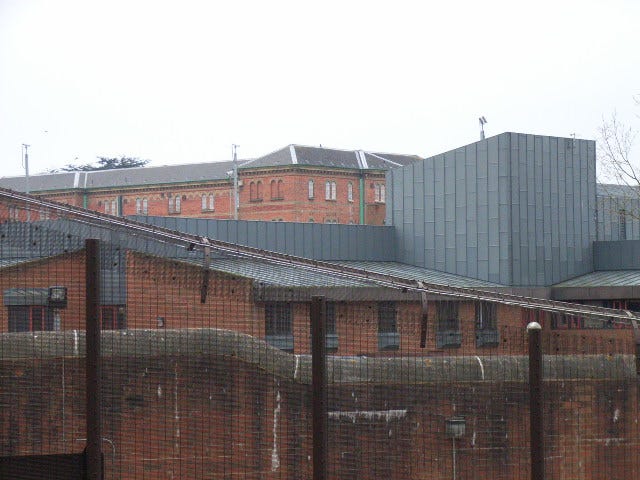
Axel Rudakubana, the murderer of three little girls, has been moved to Broadmoor on the grounds that he has a mental condition which cannot be safely managed in a prison environment. This means he has been clinically assessed as too much of a danger to himself or others for prison officers to be expected to handle. Given that he allegedly attacked a prison officer with boiling water last year, it seems likely it is the threat to others which has been assessed as unmanageable in a normal prison. A high-security hospital like Broadmoor has powers to legally administer medication including sedative and antipsychotic substances against an individual’s will and also place patients in clinical seclusion cells long-term for safety and observation. It is also fundamentally therapeutic rather than punitive: those held there are treated as patients requiring treatment rather than prisoners serving punishment. The families of the murdered girls, through their lawyers, have expressed their disgust at the move.
The social media platform, X, exploded with people responding angrily to this including the leaders of the political parties, Reform - Nigel Farage - and Restore - Rupert Lowe.


One objection is that keeping Rudakubana in a secure psychiatric facility will cost around £300,000 a year while keeping him in a normal prison costs £60,000 a year. Whether the additional cost is justified is, at least in principle, a practical question. If treatment in Broadmoor genuinely reduces risks that cannot be managed in prison, then the expense can be weighed against those benefits. This practical concern is intertwined with a moral one: that someone who committed such a depraved crime does not deserve this level of public expenditure, and that providing it appears to show concern for his wellbeing in stark contrast to the callousness with which he inflicted such suffering on three little girls. People fear that he is manipulating the system to be housed more comfortably and afforded special privileges and that he will be gloating that he has ‘won’ and escaped punishment, and that he must not be allowed to do this.
Ultimately, the various objections are manifestations of a deeper moral and conceptual concern. When Bayliss says we are incapable of thinking of the malign as anything other than insane by default and when Farage & Lowe object to Rudakubana being considered a patient rather than a prisoner, they are expressing anger at a perceived change of category from ‘bad’ to ‘mad’ on a moral level. They feel this is tantamount to at least partially exonerating him from culpability for his actions and that this is something he has manipulatively engineered. The system is letting Rudakubana win and this is intolerable.
Nor is this a particularly politically polarised issue with newspapers all over the political spectrum framing this move as a manipulation by Rudakubana that retraumatises the families and stressing the improved facilities and better food he will get to enjoy at Broadmoor. The overwhelming feeling in media output is that he has escaped punishment.
Duncan Harding, a psychiatrist who previously worked at Broadmoor told the Telegraph that he believes this to be a misconception.
“It absolutely is a therapeutic place, but it will still feel like a punishment,” he says. “The idea that he may have ‘manipulated the system’ simply isn’t possible. He would have been assessed thoroughly, and the case discussed very carefully before any transfer.
Rudakubana is believed to be intelligent and reported to have lied to social workers and Prevent caseworkers alerted to warnings signs of his potential for violence. However, he did not ever claim not to know what he was doing or appear to be at all shocked or distressed by his own actions. On the contrary, he is reported to have said, “It’s a good thing those children are dead... I am so glad... I am so happy.” Nor did his legal team advance an insanity defence, despite his having been known to mental health services for several years.
The fact that Rudakubana's legal team did not raise an insanity defence at trial has led many people to question how he can now be transferred to a psychiatric hospital. They see this as a change of story and suspect manipulation and an attempt to backtrack. However, the legal threshold for a verdict of not guilty by reason of insanity is extremely high. It requires compelling psychiatric evidence that, because of a severe mental disorder, the defendant either did not understand the nature of their actions or did not understand that what they were doing was wrong.
Rudakubana’s defence made no such claim about his mental state and this decision to move him does not make one. The transfer is not retrospectively claiming legal insanity. The criteria for compulsory treatment in a secure psychiatric hospital is entirely different. A person does not have to be so psychotic or delusional that they cannot understand what they are doing. Prisoners may be transferred to hospital when their mental condition creates risks that cannot safely be managed within the prison estate, whether because they present a serious danger to themselves or to others. Rudakubana has not been claimed to be psychotic but to have a neurodevelopmental disorder, a complete lack of empathy and a single-minded fascination with violence. He can be held responsible for his crimes despite this because he knew that he was killing little girls and that this was wrong. He does not have to be capable of empathy or devoid of blood lust to be expected to control his own impulses and so he is held responsible for his crimes.
Some have also expressed fears that Rudakubana could now be released sooner because people found not guilty by reason of insanity may be discharged from secure psychiatric hospitals if they recover sufficiently and are judged no longer to pose a serious risk. This does not apply to Rudakubana because he was found guilty and sentenced to 52 years. If and when Broadmoor psychiatrists consider him safe to leave their custody, he will be returned to prison to serve his sentence. He is not, as many fear, now being held to be less culpable for his brutal murders simply because, while he is in Broadmoor, he will be considered a patient rather than a prisoner. He remains a convicted child murderer serving a 52-year sentence, while also being treated as a psychiatric patient in a high-security hospital.
Those who believe that Rudakubana will now have a much more comfortable lifestyle with access to better food and a more comfortable cell and enjoyable activities such as swimming in the pool, using the gym, walking in attractive grounds and attending classes in things like woodworking may not be correct. His single-minded obsession with violence means he has had to be segregated in prison and still managed to pour boiling water over a guard. It is precisely these levels of risk that are judged to require a high-security psychiatric hospital rather than an ordinary prison. It is very unlikely he will be allowed to join in enjoyable group activities and Harding believes he will likely be segregated and restricted from activities unless assessment deems his behaviour has changed enough to render him safe to be allowed out. Unlike prison officers, Broadmoor staff can use clinical interventions, including rapid tranquillisation, and are specifically trained and staffed to manage extreme violence. Rudakubana may well find himself restrained and restricted more strenuously and also drugged in ways that render him too sedated to harm anybody or even to think clearly. This is unlikely to be a pleasant experience.
Regardless of considerations of quality of life, expense of upkeep and designation as prisoner or patient, it is essential that the decision to hold Rudakubana in a prison or a secure psychiatric facility remains rooted in material reality and not abstract moral concepts about what he deserves and which category of mad or bad he belongs in. The lives of prison officers depend on it.
Whether we ultimately regard someone as 'mad' or 'bad' is, at root, a philosophical question. Bayliss might argue that we, as a society, now have difficulty in seeing people who commit heinous acts as malign and instead are inclined to think they must be insane. But neither the psychiatrists at HMP Belmarsh evaluating Rudakubana nor the prison officers trying to manage his behaviour on a day-to-day basis are likely to be thinking in terms of abstract moral philosophy and the nature of evil vs the nature of insanity. They are not there to assess issues like free will, individual responsibility and the social and moral purpose of punishment or the justifiability of retributive justice. They are there to keep everybody safe and will be assessing from their professional experience where and how an individual with a mental condition that lacks empathy and is fascinated with violence can be managed. Unless there is reason to think they have been ideologically captured to a point where this is affecting their professional judgement, armchair psychologists and philosophers should probably take a back seat.
Ultimately, the issue is not about societal attitudes to distinctions between ‘malign’ and ‘insane’ or about what feels like the appropriate place for a mass murderer of little girls to be punished. The public, politicians and philosophers are all entitled to debate what Rudakubana deserves. Where he can most safely be managed is a different question altogether. It’s one for psychiatrists and prison professionals.
The point of moving Rudakubana to Broadmoor is to be able to drug him (aka 'treatment'). Prison officers are not allowed to sedate him or keep him with all possible weapons (such as a kettle) removed.
The assessment of him for sentencing him did not identify him as mad and in need of treatment. But, then psychiatrists and social workers have a poor record in advising who is mad or bad or who should be kept locked up for public safety.
Isolated and drugged in Broadmoor strikes me as appropriate. Staff there will be too experienced to be attacked by a kettle of boiling water. The problem will come when psychiatrists hubristically claim to have effected a cure.
Ultimately he is being removed from society for 52 years, and if his transfer is mainly about protecting other prisoners and guards from his behavior, it seems fairly pragmatic.